Related articles

Discord, the essential tool for confined teleworking
At CapSens, already practicing teleworking at the rate of one day a week, our corporate culture was already oriented in this direction and we were equipped for the new situation: confinement.
However, this time it is different because we are all simultaneously teleworking for an indefinite period of time. Concerns about the problems of remote work were not long in coming.
Problems related to teleworking
- The drop in morale linked to isolation, the lack of interaction with colleagues or loved ones.
- The difficulty of communication. Of course, like all startups, we have an instant messaging service; Slack. However, we use it for non-urgent messages(asynchronous conversations) in order to avoid distractions as much as possible. So when working from home it is more complicated to organize an impromptu point.
- Effectiveness. Being away from colleagues gives the impression that you are alone and that nothing is progressing. It can be annoying and you can unplug and take long breaks, especially with all the distractions at home.
Solutions
Of course we have recalled the good practices of teleworking:
- Maintain a healthy lifestyle by not going to bed too late and by avoiding waking up 5 minutes before you start working.
- Maintain your morning ritual: Get up, shower, Get dressed, watch the news etc. as you want, the goal is for it to be a morning like any other and to be fresh for the start of the day.
- Have a “work area.” A table, a good chair and a bit of peace and quiet. To be able to be as comfortable as possible while working and to separate the “work area” from the “living area” well, even if 50 cm separate them.
For the rest, we have confidence in our employees and our processes so as not to change the way we manage and avoid micro-management. In any case, everyone's work at CapSens is visible and quantifiable.
But now, let's get to the heart of the matter about the only tool we've added to allow us to work well during lockdown: Discord.

For the least“gamer”Among you, Discord is the“Slack” from the world of video games.
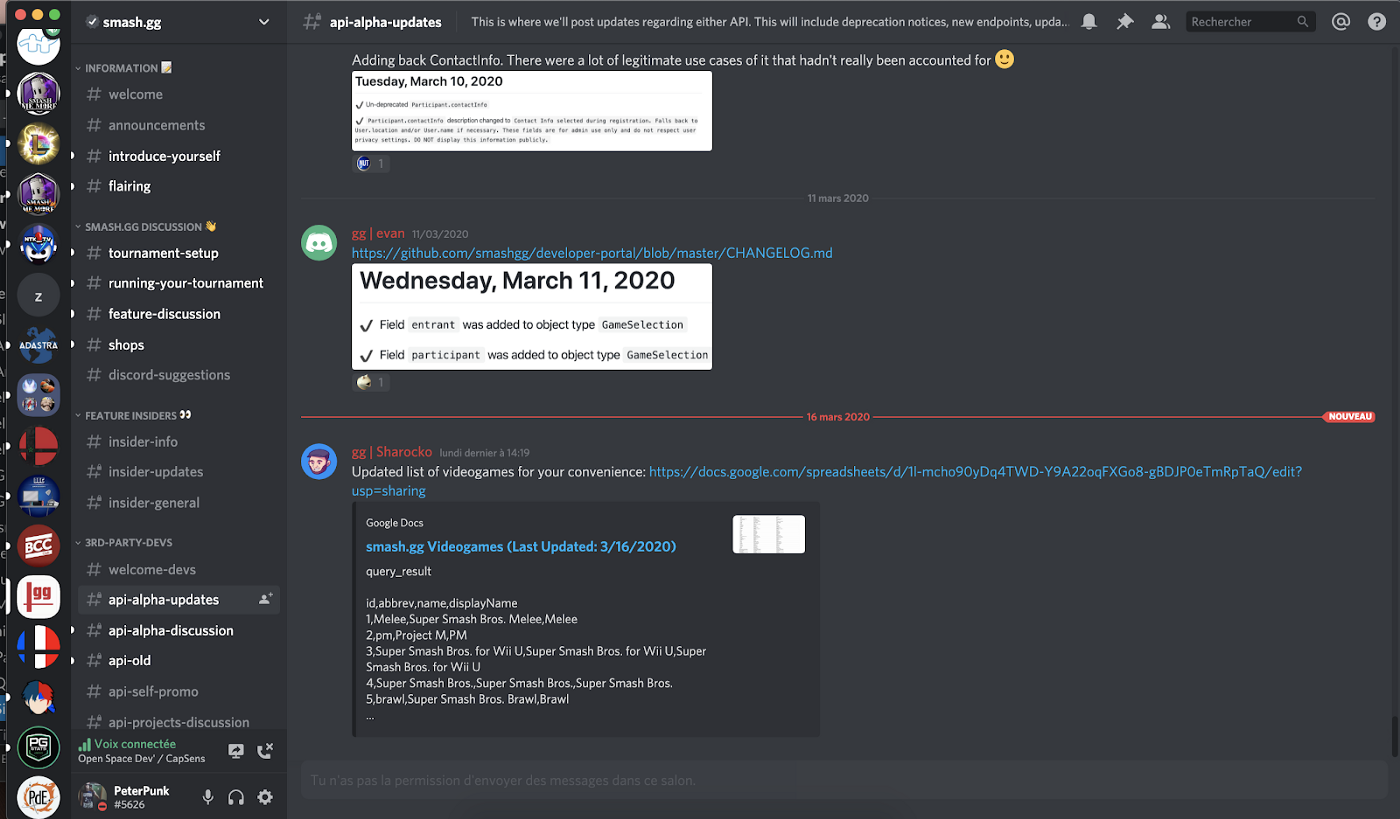
As you can see, its interface is similar to that of Slack. Several chat channels, possibility of being on several servers simultaneously. Even the shortcuts are the same.
But why have a second tool that does the same thing as what you already have? You will tell me. For an essential feature: The vocal channel , which has nothing to do with the Slack feature call.
Discord is a video game-oriented community tool. It is therefore important to be able to talk together when playing online. So we diverted its use for professional purposes.
Being able to have voice communication channels all the time is a huge benefit. Since the latter is gamer-oriented, the voice detection system is the most interesting feature. Because once properly adjusted, you can work and talk without having extraneous noise. (keyboards, table...) and have the feeling of being at the office.
Discord, uses the same channel concept (Channels) than Slack, so those who don't know it get used to it very quickly. What's more, Discord is available on all platforms, mobile and browser.
Discord at CapSens
To use it well we have set a few rules:
- The use of Discord is not mandatory. If someone feels that Discord is more harmful than beneficial for them then they don't have to connect to it. On the other hand, for the team breakfast on Monday morning, everyone is connected to it at 9 am to say how they are doing, tell us about their weekend and what they are going to do this week.
- Discord is not used to write messages, only voice. For the rest, Slack remains the reference, in order not to overlay the tools.
Here is the message I posted on 12/03/2020, the first day of lockdown at CapSens.

So that everyone can get back to their habits without multiplying the rules, we simply replicated the office rooms in the conversation channels.
We want to quickly make a technical point or ask a question: we meet up on the hallway table, we make a longer point planned in the agenda: we meet in one of the meeting rooms, no need to change them in the agenda invitations, we want to chat during the lunch break: we meet up at the Ruisseau, the hamburger restaurant we love, and for the after-work beer, go to “39”, the bar under the office.
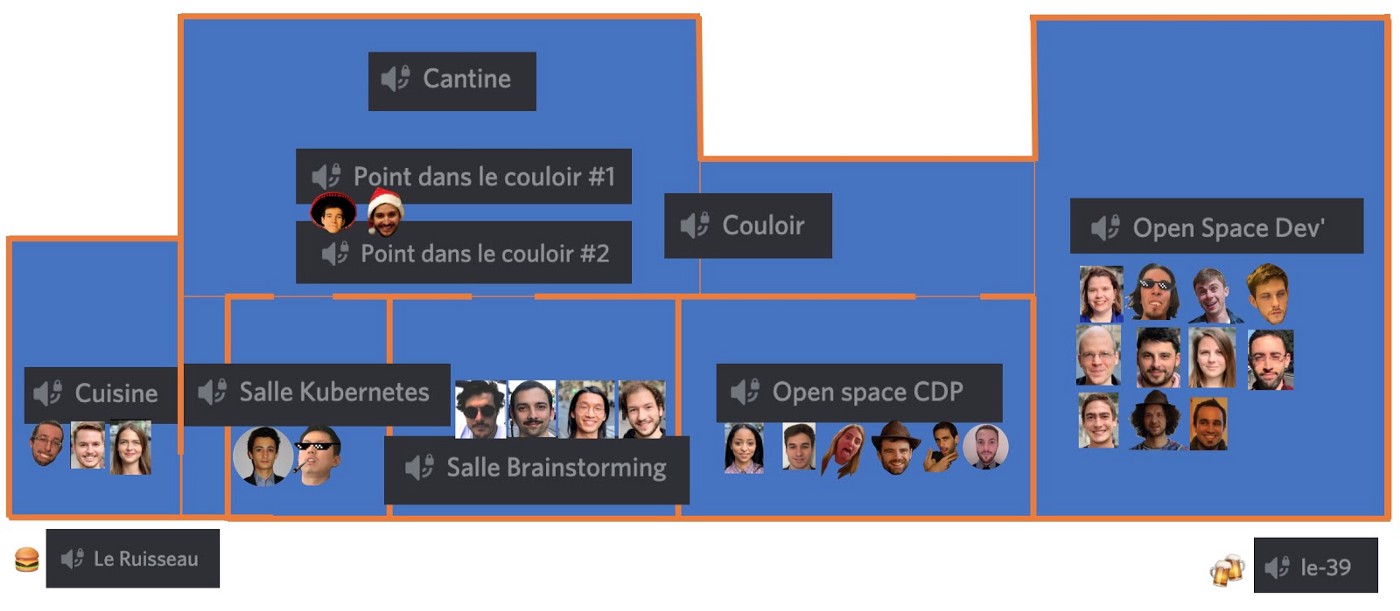
Everyone sees who is present in which space and can join the space by clicking on it. No spy in confidential conversations because every presence is visible. For example, on the screenshot of our channels below, we can see that most of the connected people work alone in silence and that three people, Ismael, Jullian and Jerome, make a point together in the hallway while Juliette takes a short break. We also notice that many use Discord but only connect to it when needed, to have a scheduled meeting or a quick point offered on Slack for example. So out of 30, 14 people are connected at the time of the screenshot.

Results
The arrival of Discord as voice support to Slack is a success because:
- Even the most skeptical have already used it at least once (excluding breakfast)
- The social link is maintained, we had events such as the after-work drink on channel “39” (the bar at the bottom of the offices)
- The feedback from employees is positive and the effect is undeniable. We are as efficient as in the office and morale remains high despite the lockdown.
Thank you Discord
(Promise, they don't pay me)