Related articles

Indictment against the media that get paid to praise startups
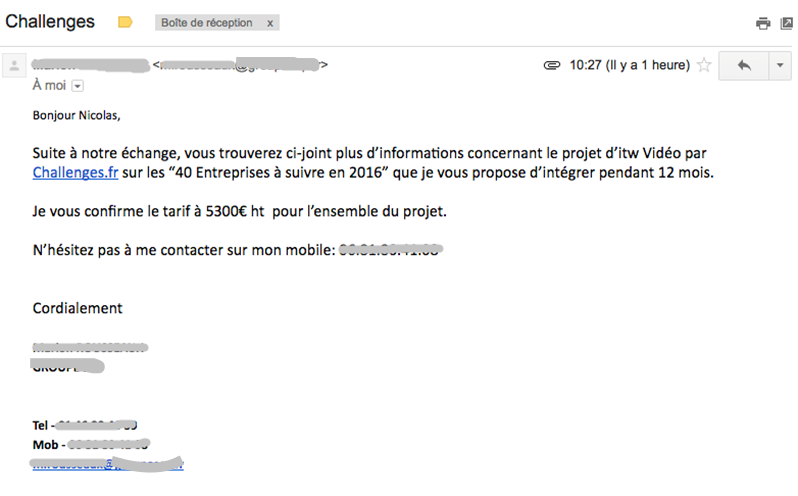
In recent months, we have been contacted several times by advertising agencies who pretended to be French newspapers or magazines offering us a journalistic interview and a feature article in exchange for a fee. During the call the caller says I am XXXX from Challenges magazine (or other) and never says the word advertising.
Outraged by this advertising practice that is opaque to readers, I made a Facebook post in a group bringing together many French entrepreneurs and we realized that this practice was commonplace in the ecosystem.
Today, I am writing this article to formalize the exchanges we had around the use of this publishing drift and to share with you my research.
What is advertorials?
A communication agency that contacted one of us defined editorial advertising as follows: “An advertorial is an advertisement disguised in the form of an article or an interview. Disguised because you paid to be in this magazine, on this page or on this site but nobody knows it, especially not your customers, your prospects or your potential investors... This offers the advantage of masking the commercial discourse and of having a more relevant and more impactful feedback than traditional advertising.” In short: we smoke out customers, investors, friends, etc.
Advertising agencies therefore present editorial advertising as an article that we write to promote our startup but that we pay for it to be highlighted and that no one realizes that it is published for advertising purposes.
By taking an interest in this practice, I realized that the law specified — very luckily — that any article that takes the form of an advertorial must explicitly announce to its reader that it is advertising. As a result, while doing some research, I came across articles highlighting startups with very ambiguous messages about the advertising nature of the article.
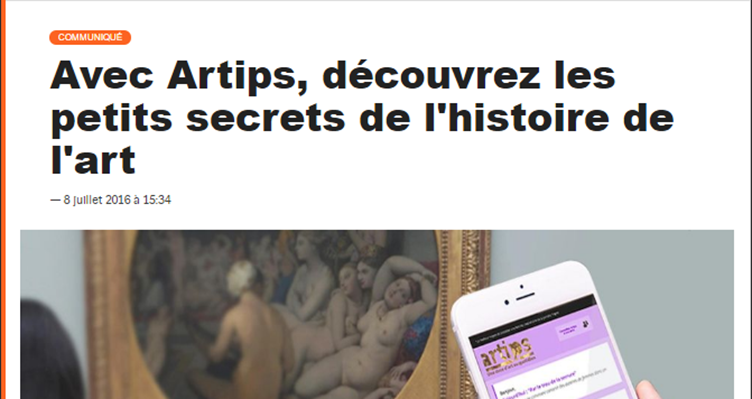
For example, this Libération article on the startup Artips is an editorial ad sold for €2,500, but the only signs that prove that it is an advertising article are the “press release” tag, which is very vague and the orange banner on the left, which distinguishes this article from other articles on the site.
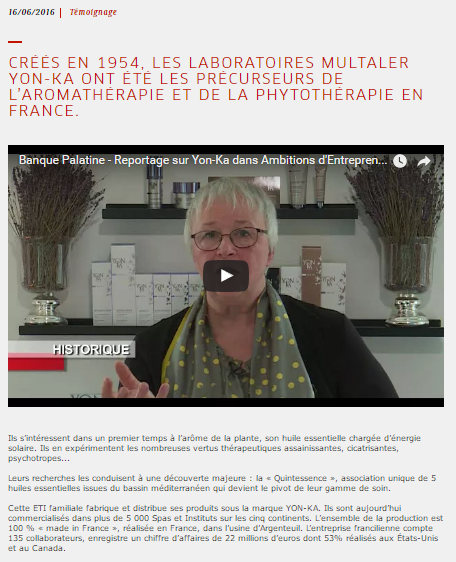
In the same way, I-Télé broadcasts a program sponsored by the Palatine Bank that highlights startups. This sponsorship is specified each time the show starts, but is not really different from an early program ad. And if we dig a little deeper, we realize that Palatine offers its clients to invest in some of the startups credited by this show, such as the YON-KA laboratories.
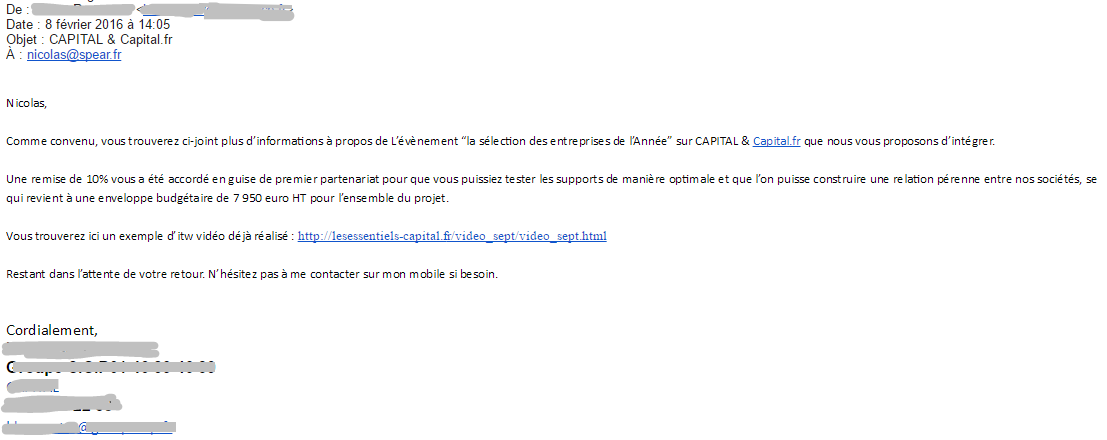
As far as we are concerned, we have been contacted twice in the last few months. A first time to be part of the “selection of companies of the year” by Capital magazine for a price of €7,950. A second time to participate in a Challenges program: in exchange for nearly €5,300, my startup could be listed by the magazine as one of the 40 startups to follow in 2016 and a video and an article would have been dedicated to it.
Looking at the emails in detail, I realized that both times we were approached by the same advertising agency that works with major French magazines.
Even if advertising agencies are taking the initiative to offer this kind of content to the media, they need to wake up because these practices greatly affect the quality of their publications.
A practice with harmful consequences on the startup ecosystem
The other main victim of this practice is the startup ecosystem. Because these items are creating a fad about businesses that are not worth it but that by the simple fact of having spent money are promoted to the general public. By reading a hidden advertising article about a startup, a reader can get attached to it and when this startup does not meet expectations, he feels cheated and his disapproval spreads to the entire ecosystem: “There's a bubble just tell you, you'll see”.
More generally, we note that journalists often leave their critical thinking aside when writing an article on a startup because they want to write a “positive article” and want to highlight “those who make France move” blablabla. Stop! It is time to mature!
However, I am hopeful that quality investigative articles will become widespread (I may be dreaming...) as the major newspapers do on other topics: politics, society, big companies, etc. This will surely come over time for startups, just as the ORTF is no longer there to praise every decision of the executive...
In short
Today, members of the startup ecosystem get information on specialized media (Techcrunch, Numérama,...) and especially on the quantities of independent posts from each other, but the general public is fed by advertising without knowing it and realizes, sometimes bitterly, that the wheat was chaff.
Update of 19/09/2016
Following the publication of this article:
- Challenges magazine has removed the section offender who was on the home page of her site,
- And the manager of the main advertising agency involved told me that he was losing contracts because of the fallout (^^). This was confirmed by at least one of his customers.
This was possible thanks to the responsiveness of Mediapart, which put the article (duplicated on a Mediapart blog) on the home page of its site and Arrêt sur images, which pushed the investigation a little further: http://www.arretsurimages.net/…/Publi-reportage-un-start-up....I pass on the various exchanges (or threats!) with most of the offending businesses/media/com agencies. It is quite amazing to see that some newspaper or company managers can exercise their profession with so little professional ethics without seeing a problem because “the press is in crisis” and “that's the way it is in the business”.
Article amended after publication