Related articles

Everything you need to know about investment taxation: Flat Tax, IFU and more 💰📊

Introduction
If you're an investor in France, you've probably already come across terms like Flat Tax and Imprimé Fiscal Unique (IFU), but what do they really mean? 🤔 Well, don't worry, we're going to demystify it all! In this article, we will explore how taxation applies to your investments, especially with Flat Tax and IFU, and how you can optimize your tax reporting to reduce your tax burden. 🌟
What is Flat Tax (or Single Flat Rate)?
Flat Tax, or PFU, was introduced in 2018 to simplify the taxation of financial income. This overall tax rate is 31.4% (it was 30% until 31/12/2025), and it applies to your investment income such as interest, dividends and capital gains. Here is how it is distributed:
- 12.8% for income tax (IR)
- 18.6% (17.2% until 31/12/2025) for social security contributions (CSG, CRDS, and solidarity levy) . 💸
In concrete terms, this means that if you receive investment income, you are subject to this taxation in a simplified manner, without having to detail each type of income.
However, there are options for tax exemptions to alleviate this taxation. We'll see that in the next section! 👇
Tax exemptions: How to reduce the taxation of investment income?
Although Flat Tax simplifies taxation, there are tax exemptions that reduce the bill! 🎉 These exemptions mainly concern income tax (IR) or social security contributions.
Income Tax Exemption (IR)
If your reference tax income is less than €25,000 for a single person (or €50,000 for a couple), you can request an exemption from income tax. 🎯 This exemption only applies for one fiscal year and must be renewed each year before November 30 in order for it to be valid for the following year. Be careful not to forget the deadline! ⏰
Exemption from Social Security Contributions (CSG/CRDS)
Foreign residents or cross-border workers can benefit from an exemption from social security contributions. This means that you can be exempt from the CSG (10.60%) and the CRDS (0.50%), but not from the solidarity levy. A simple certificate of residence or membership in a health plan will do the trick. 🌍
The Single Tax Form (IFU): The declaration of investment income
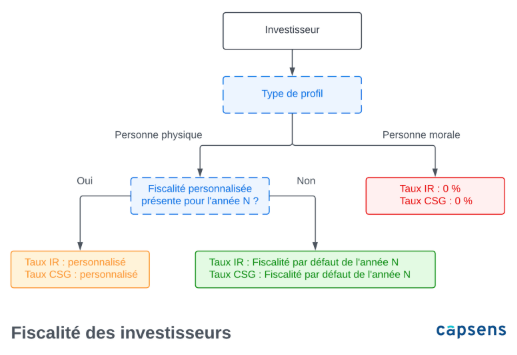
When you receive investment income, you must fill out the Single Tax Form (IFU). This document is provided by your financial institution and summarizes all the income received. It's a bit like your fiscal “road map”! 📑
The IFU is used to declare your interests, dividends and capital gains realized during the fiscal year. It is essential to fill it out correctly to avoid mistakes and penalties. 📈
And if you are entitled to tax exemptions, such as those from IR or social security contributions, the IFU will reflect them. This is handy to make sure everything is in order! 👍
Mistakes to avoid when reporting investment income
Skipping the reporting deadlines: Whoops, if you forget to submit an exemption request by November 30, you may end up with additional levies for the following year. 🚨
Ignore possible exemptions: If you are eligible for an IR or social security exemption, but don't submit the request, you may end up paying higher taxes than necessary. 😱
Poor IFU management: If you do not complete the IFU correctly, it could lead to errors in your tax return. Not very fun when we talk about penalties or overtaxation! 😬
Conclusion: Stay informed to optimize your taxation on investments
Taxing investment income may seem complex, but with a little attention and preparation, you can easily optimize your tax obligations. 💡 By fully understanding the principles of Flat Tax, Tax Exemptions, and IFU, you will be well equipped to manage your finances effectively and reduce your tax burden. 🚀
Remember to check your eligibility for tax exemptions every year and submit your returns on time! ⏳ If you have any questions, do not hesitate to consult other resources to learn more about the taxation of investment income! 💬
At Capsens, we integrate Flat Tax and IFU management directly into our clients' investment platforms, guaranteeing optimal compliance and simplified tax management.